
Orthodontics for children

Orthodontics for children – the foundation of a perfect smile
Why is orthodontic treatment in childhood important?

Orthodontics at different stages of childhood
When should orthodontic treatment start?
Google reviews
Orthodontics at different stages of childhood
Orthodontics during the baby-teeth stage (ages 2–7)
At this age the baby (primary) teeth still dominate, but orthodontics can already play an important role in certain cases.
Treatment goals in early childhood
- Recognising bad habits: dummy use, thumb sucking or incorrect swallowing can affect the development of the jaw and teeth.
- Correcting jaw problems: early treatment can prevent a more serious discrepancy from developing.
- Space maintenance: if a baby tooth is lost early, it is important to keep enough space for the permanent teeth.
Recommended treatments
- Space maintainers
- Removable appliances with auxiliary elements
- Myofunctional trainer
Orthodontics during the mixed-dentition stage (ages 7–12)
During this period the baby teeth start to fall out and the permanent teeth take their place. This is the ideal time to begin orthodontic treatment.
Treatment goals in early childhood
- Keeping space for the teeth: we help prevent crowding and keep space for the permanent teeth.
- Treating bite problems: mild to moderate bite problems can be corrected effectively.
- Jaw harmonisation: we guide the correct growth of the jaw with functional appliances.
Recommended treatments
-
Removable appliances
-
Space maintainers
-
Inclined bite plane
-
Fixed braces
Orthodontics in adolescence (ages 12–18)
By adolescence all the permanent teeth have come through, so the aim of treatment is to align the permanent teeth and achieve an optimal bite.
Treatment goals in the teenage years
- Resolving crowding: misaligned teeth can cause both aesthetic and functional problems.
- Correcting bite problems: treating more complex problems such as a deep bite or a crossbite.
- Aesthetic goals: orthodontics helps restore a harmonious smile.
Recommended treatments
- Fixed braces
- Clear aligners
Why does the right timing matter?


6 signs that may point to an orthodontic problem
Book an appointment todayThe 6 most common orthodontic appliances for children in my practice
- Myofunctional trainers
- Functional appliances
- Space maintainers
- Fixed braces
- Clear aligners
- Inclined bite plane
6 things that make or break orthodontic treatment in childhood
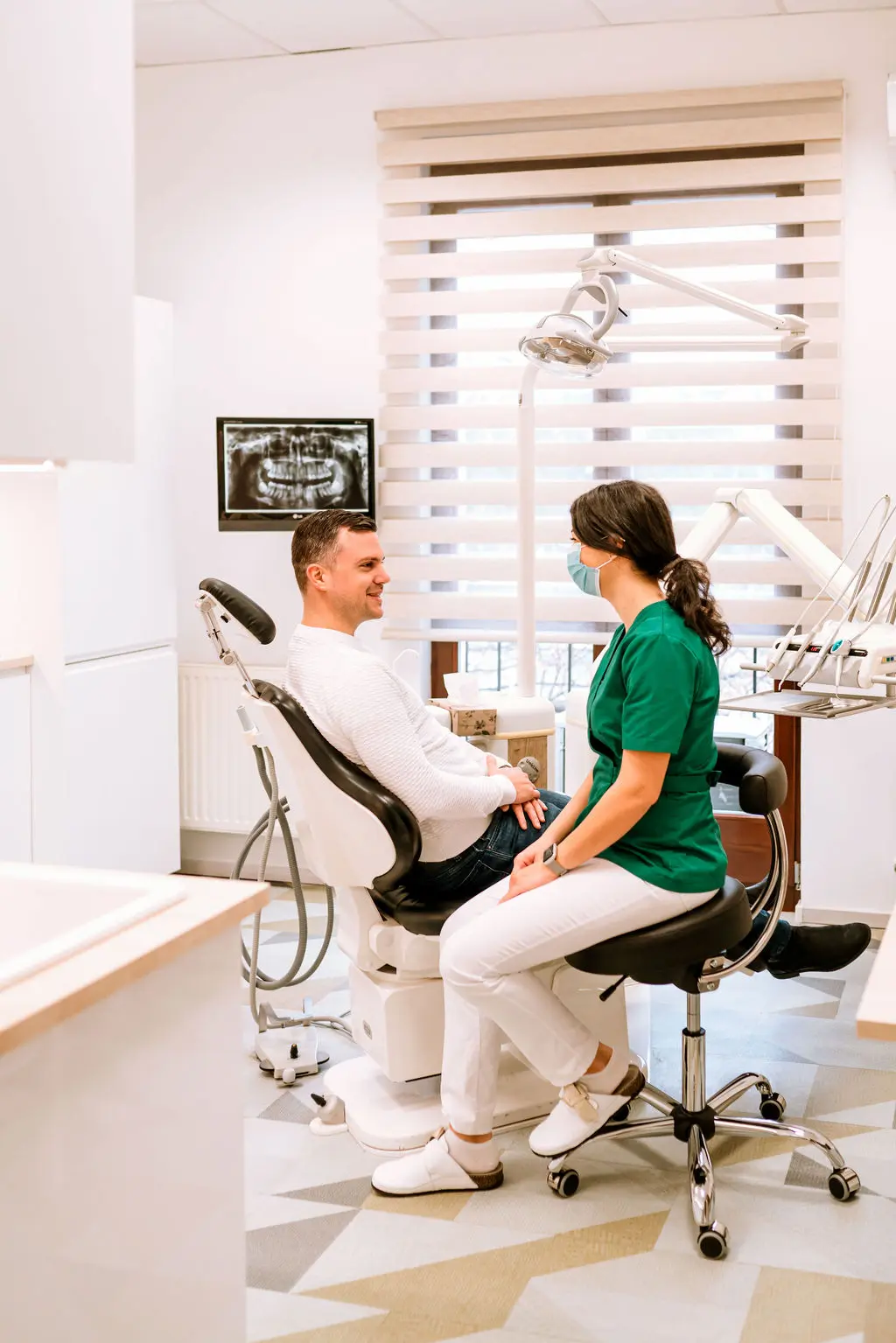
1. The right timing
I believe the key to successful orthodontic treatment is starting at the right age.
• Early treatment (at age 6–7) can prevent more serious problems.
• In adolescence we focus on the final positioning of the permanent teeth.
At the first consultation I assess and we discuss when it is best to start treatment.
2. Patient cooperation
The child's active participation is essential for success:
• Removable appliances must be worn (for the prescribed number of hours).
• It is important to follow the eating rules (for example, avoiding hard or sticky foods with fixed
braces).
• Regular tooth brushing is essential to prevent tooth decay.
The parents' role in motivating their child is also decisive.
3. Choosing the right appliance
Choosing the right appliance is essential for effective treatment.
• Removable appliances are used in early childhood.
• Fixed brackets are placed on the teeth for more serious problems.
• Functional appliances are used to treat jaw problems.
Every decision is based on individual needs and the dental problem in question.
4. Regular check-ups
Check-ups are essential during orthodontic treatment:
• I regularly check how effectively the appliance is working.
• Any necessary adjustments are made in good time at the check-ups.
• This allows us to follow the child's development and adjust the treatment if needed.
Missed check-ups can make treatment longer or less effective.
5. Maintaining good oral hygiene
It is harder to keep the teeth clean around orthodontic appliances, so good oral hygiene is crucial.
• Brush 2–3 times a day with special toothbrushes.
• I strongly recommend a water flosser or dental floss for hard-to-reach areas.
• Regular dental check-ups are essential to prevent tooth decay.
6. Parental support and attention
Orthodontic treatment for children is a long process in which the parents' role is especially important:
• Parents help the child follow the instructions.
• They make sure the child wears the appliance regularly.
• They support building and maintaining good oral care habits.
Parental attention and encouragement are indispensable for successful treatment.
Summary
